Launch offer — valid today only

📄 Digital book in PDF · read it on your phone or print it

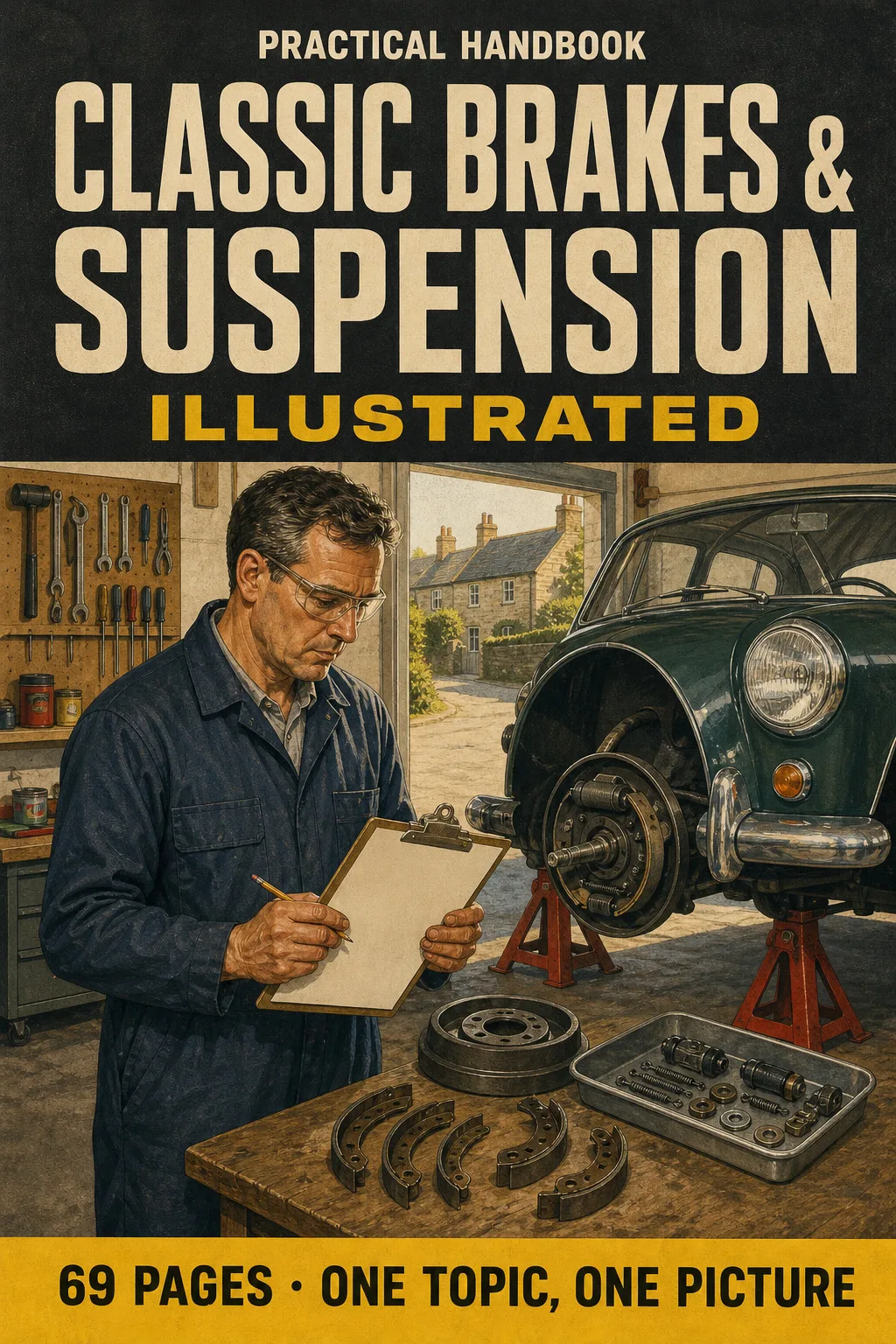
Classic Car Brakes, Steering and Suspension in Drawings One Job on Every Page

Drum brakes, wheel cylinders, disc pads, the master cylinder, pipe flaring, bleeding, kingpins, lever arm dampers and wheel bearings. Every job has its own page: the drawing first, then what you need to remember. 69 illustrated pages.

I WANT THE 69 ILLUSTRATED PAGES

🔒 Secure checkout · PDF by email · 30-day guarantee

Every topic, its own pageEach job drawn in numbered steps, with the explanation alongside
69 illustrated pages8 parts, from the order you follow every time to your own service record
Up-to-date sourcesChecked against the DVSA MOT inspection manual and GOV.UK historic vehicle guidance
PDF by emailFormat

Look Inside the Book

Every page has one large drawing and a box with the steps and checks you need to know:

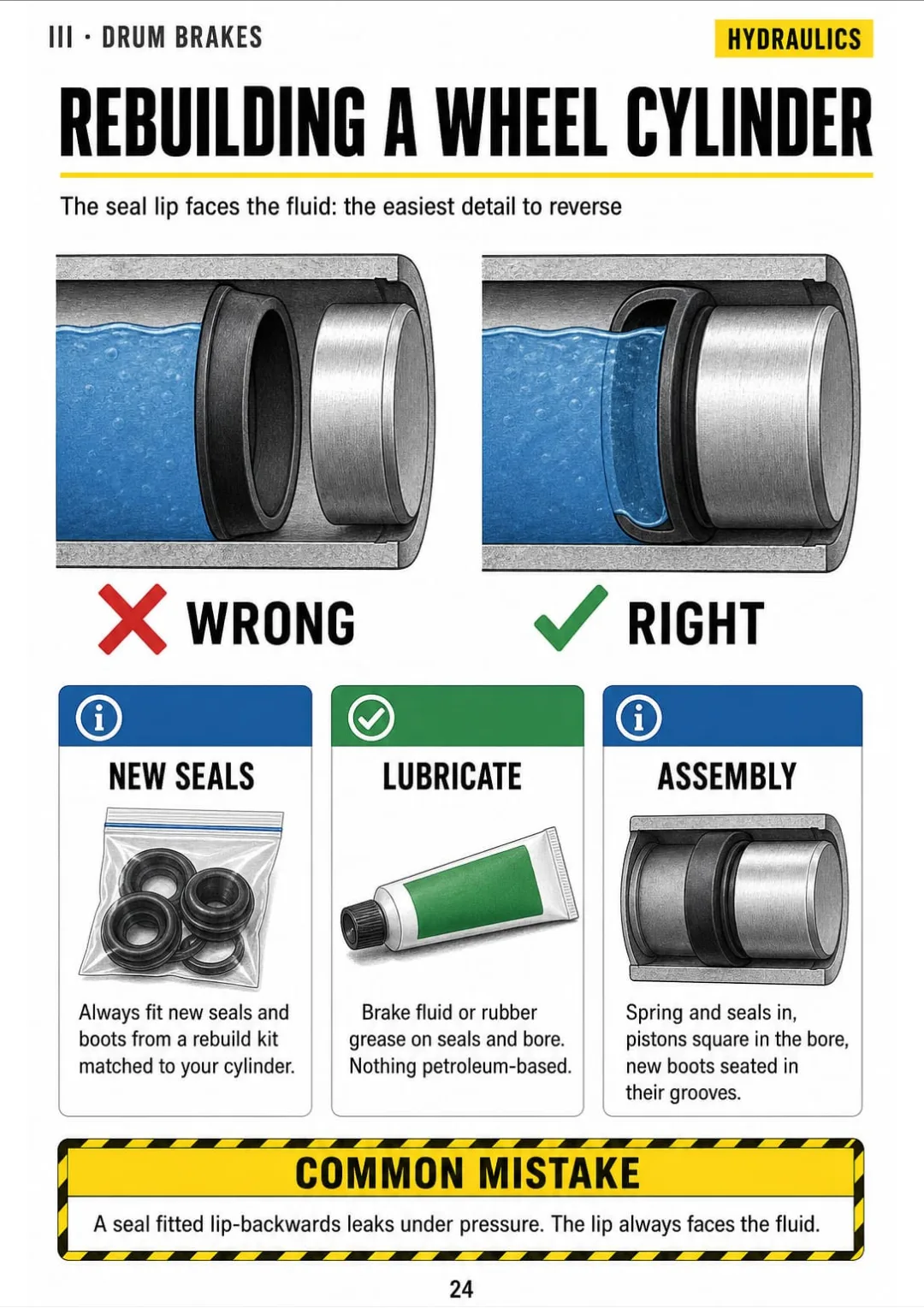
Seal lip faces fluid pressure: the detail most often fitted backwards.
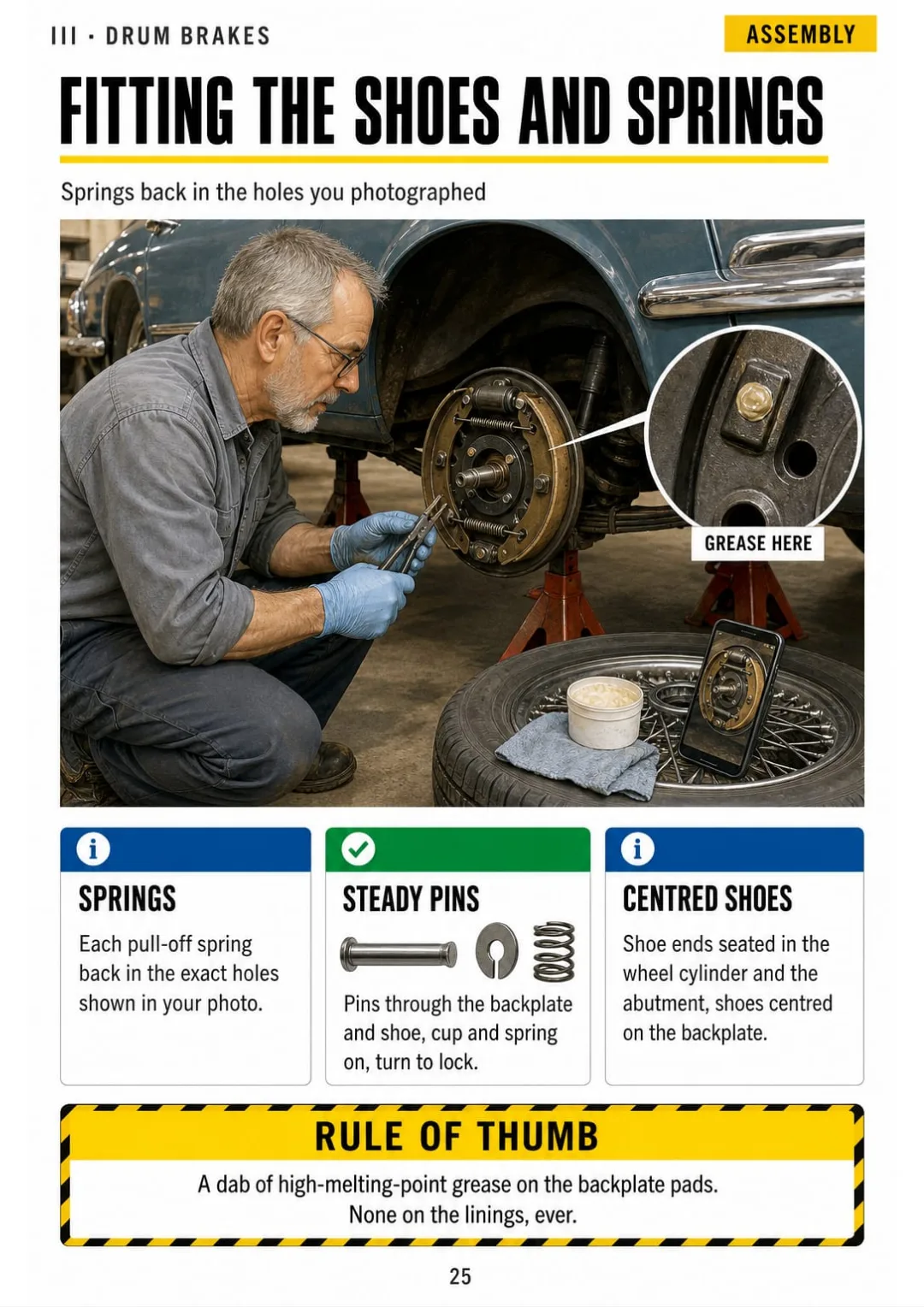
Steady pins through the backplate, shoes centred, grease on contact pads only.
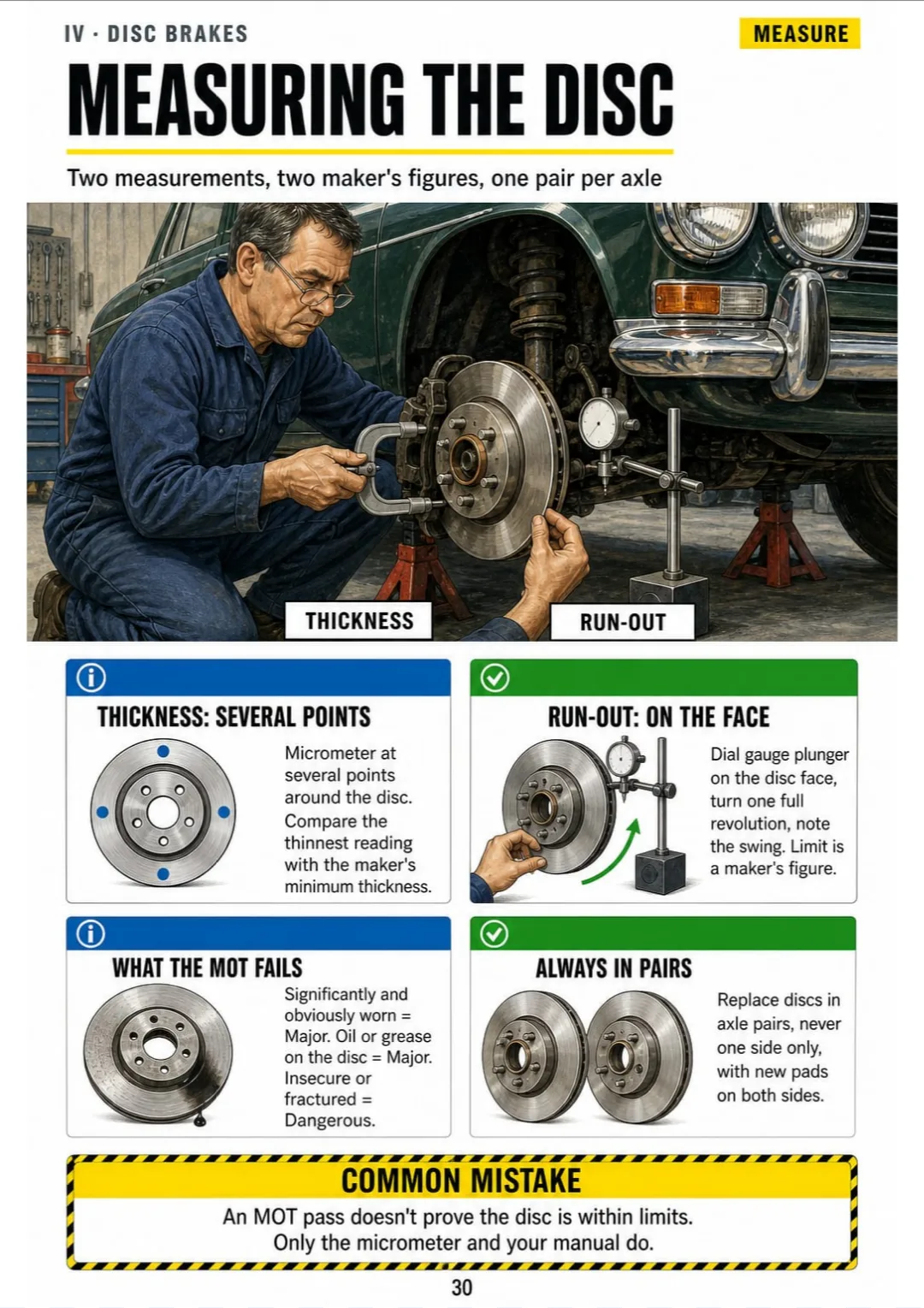
Thickness at several points, run-out on the face, discs in axle pairs
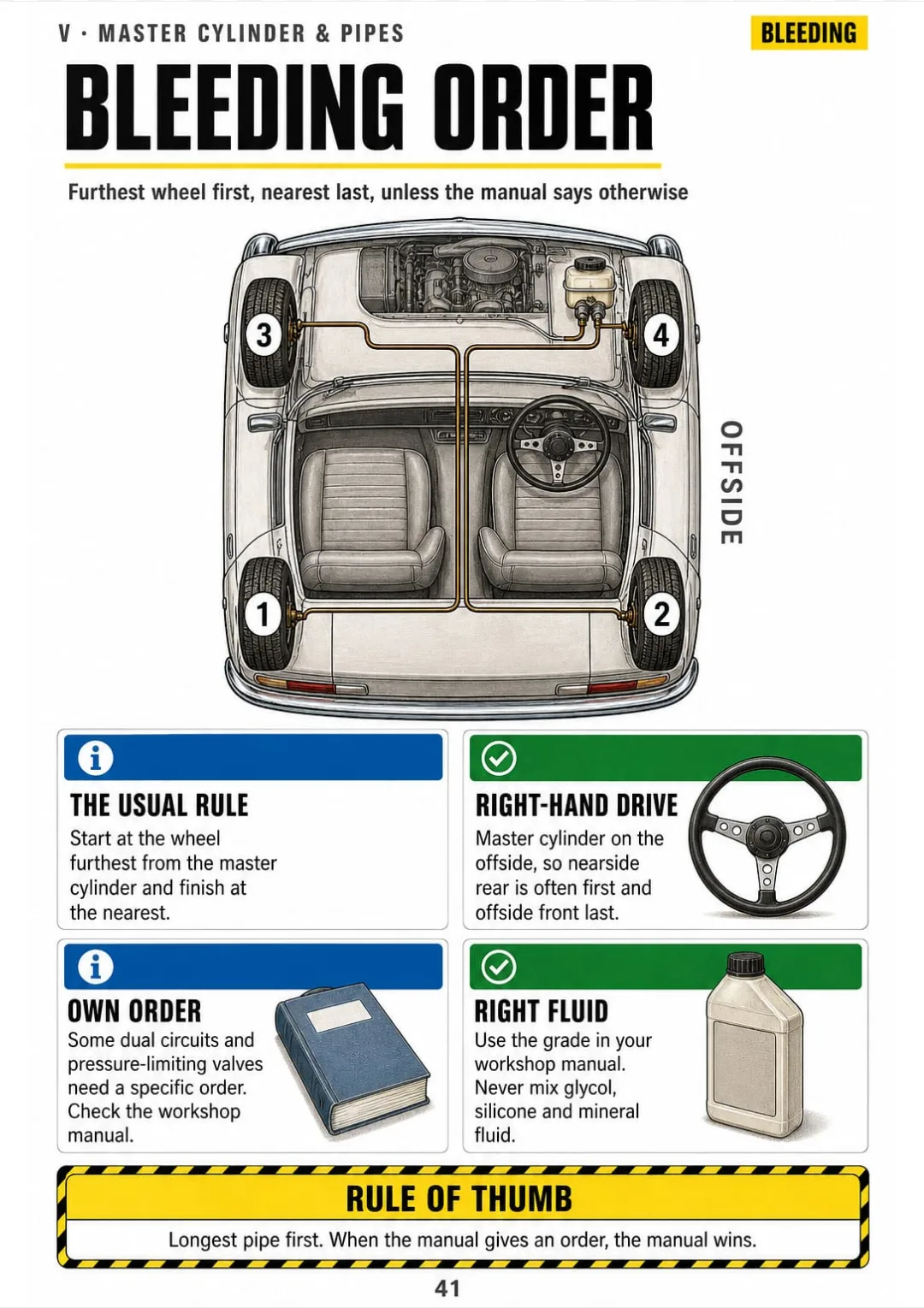
The usual bleeding order on a right-hand-drive classic, wheel by wheel
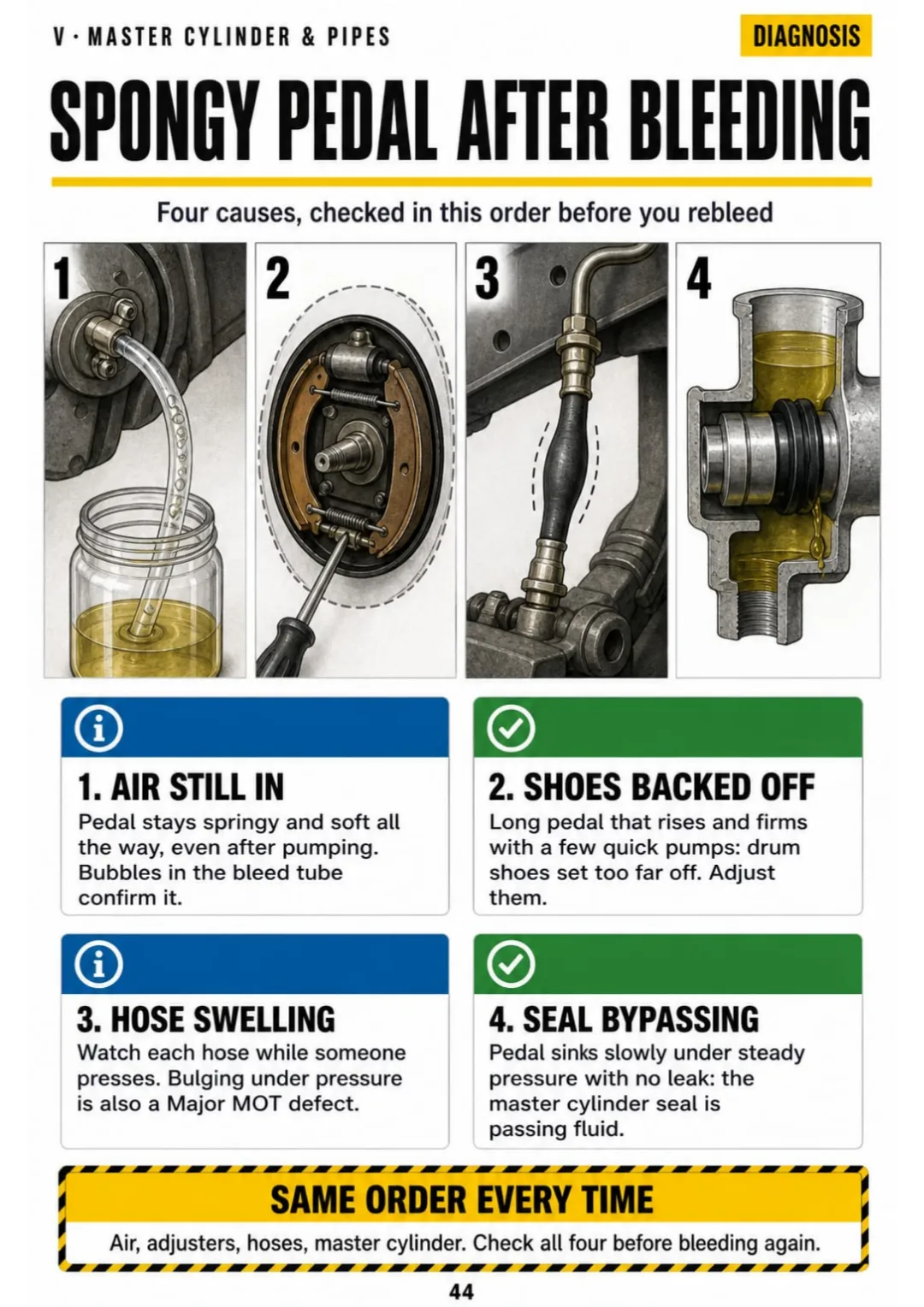
The four causes of a spongy pedal, checked in the same order every time
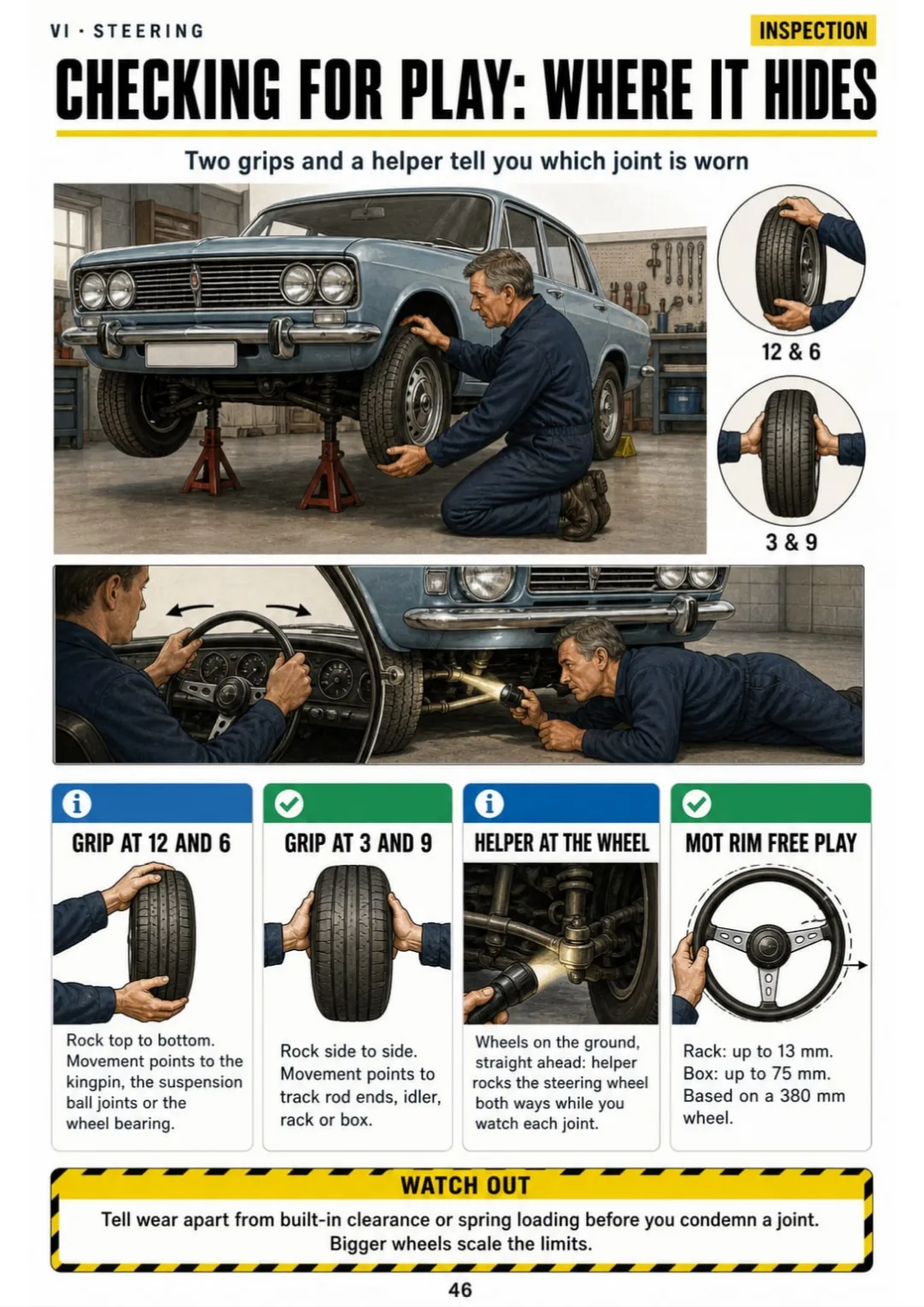
12 and 6 o'clock for kingpins and bearings, 3 and 9 for steering joints
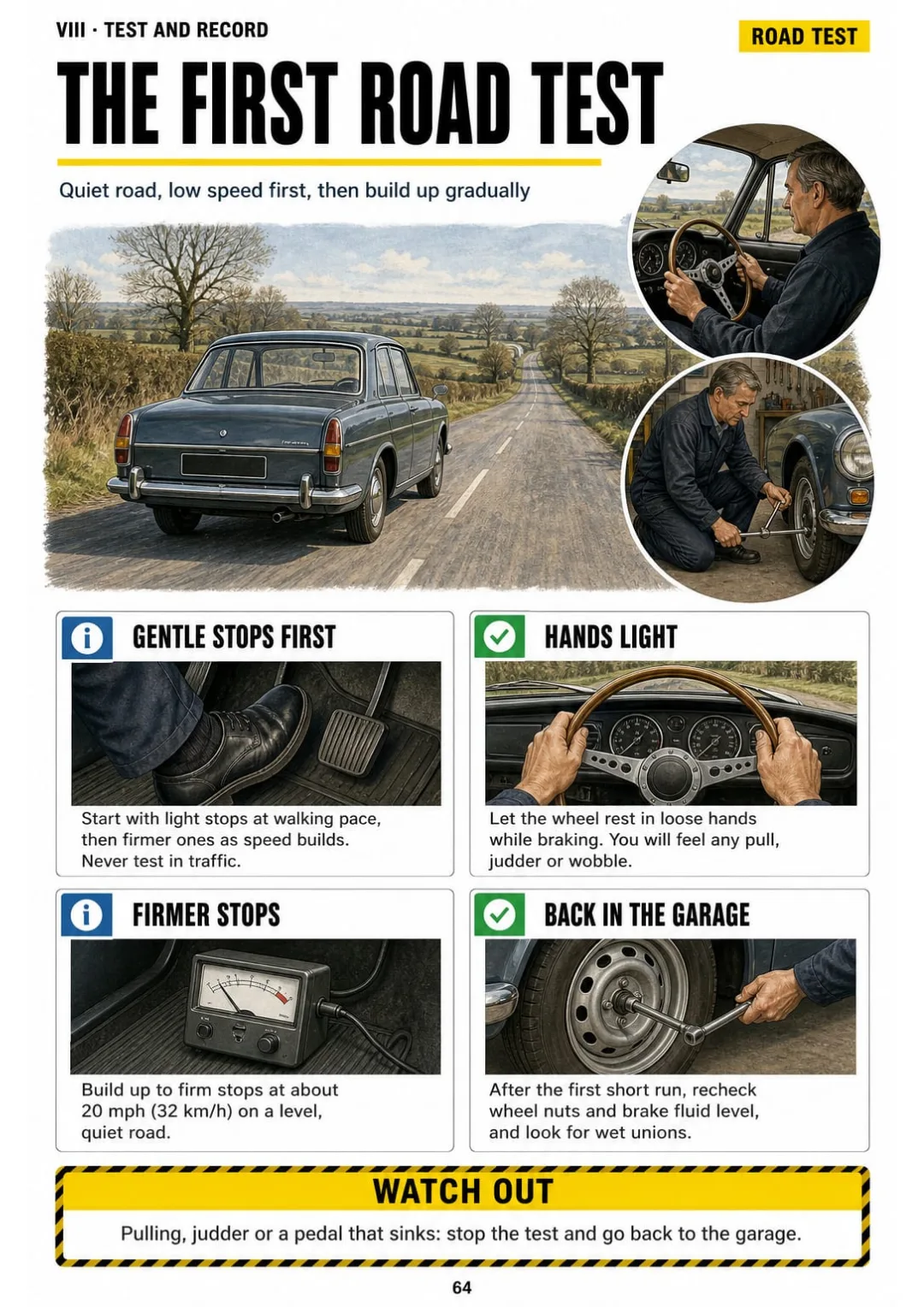
Gentle stops first, hands light on the wheel, then recheck wheel nuts and fluid
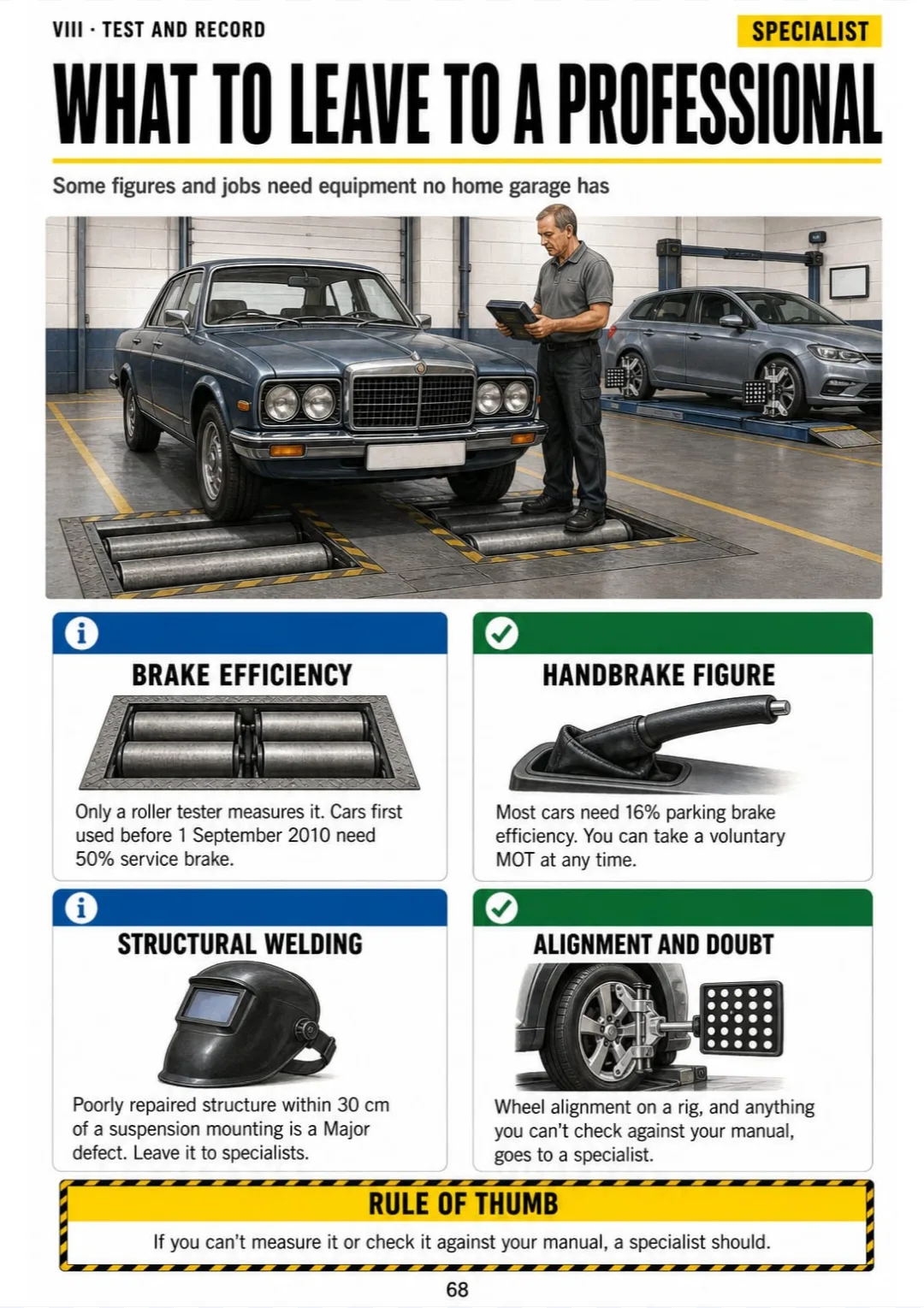
Brake efficiency on rollers, structural welding and alignment rigs go to a professional

Swipe to see more →

These are real pages from the book. The table of contents is the full one: 8 parts and 65 topics.

The Problem Isn't You. It's How It Was Explained.

You're kneeling by the front wheel with the caliper in front of you, and the new pads won't go in. The pistons are sitting proud and you're not sure how hard to push them back.

The workshop manual gives it one paragraph: remove pins, withdraw pads, retract pistons, refit. Not a word on which way the shims faced, or the fluid creeping up in the reservoir as the pistons go back.

Thickness at several points, run-out on the face, discs in axle pairs

In this book, changing the pads is one page. Pins out, shims noted, pistons back slowly, new clips, pump the pedal, drawn in that order with the caliper close up.

It's the same with stripping a wheel cylinder, the bleeding order, shimming a kingpin and setting wheel bearing end float: each job has its own page.

You see it, you understand it, and you finish the job without going back to the manual, apart from checking your own car's figures.

COMPARE FOR YOURSELF

The Same Job, Two Ways to Learn It

THIS
  • The manual: line after line of text
  • Shoe layouts explained only in words
  • You get to the bench still unsure
In the leading and trailing shoe arrangement, a single double-acting wheel cylinder is mounted at the upper end of the backplate, the shoes pivoting upon a fixed abutment at the lower end. The shoe whose toe is first encountered in the direction of drum rotation is designated the leading shoe and is subject to a self-servo effect, frictional drag tending to wedge it against the drum, whereas the trailing shoe is urged away. Twin leading shoe systems, generally fitted to the front axle, employ two single-acting cylinders.
FOR THIS
  • Leading and trailing shoes in one drawing
  • The rotation and the pivots in a box
  • You see it and you get it
Steady pins through the backplate, shoes centred, grease on contact pads only.
CONTENTS

Take a Look at the 8 Parts and 65 Topics

Before you start, how the hydraulics work, drum brakes, disc brakes, the master cylinder, pipes and bleeding, steering, suspension and wheel bearings, and testing and record-keeping: 69 pages, all illustrated.

IBefore You Pick Up a Spanner · pp. 5-12
  1. The Same Order Every Time
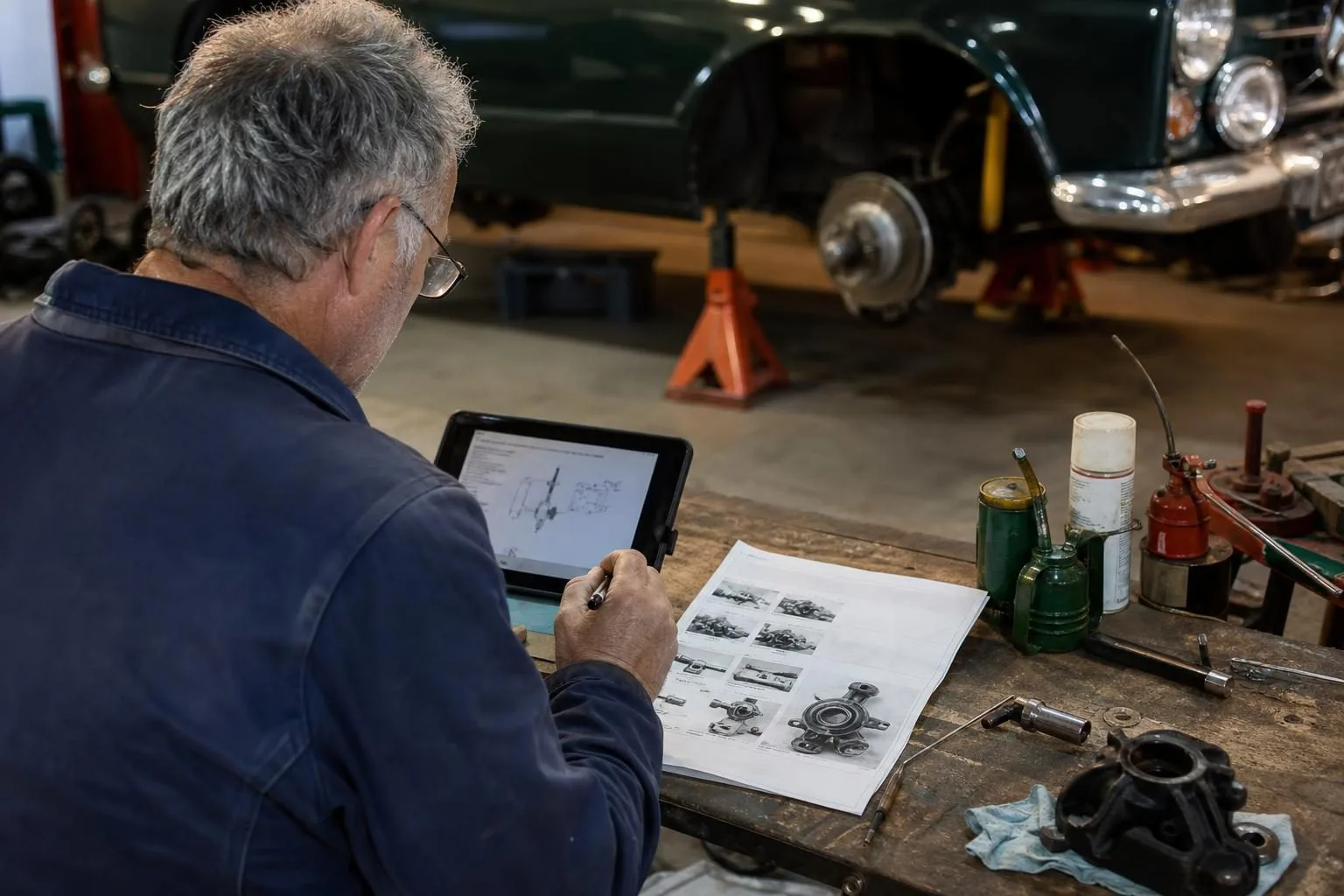
  2. How to Read Your Workshop Manual Alongside This Book
  3. Lifting the Car Safely
  4. Old Brake Dust: Treat It as Hazardous
  5. The Bench Kit for Brakes and Suspension
  6. Label, Bag and Photograph
  7. Torque, Split Pins and Locking Tabs
  8. Your Classic and the MOT
IIHow the Hydraulics Work · pp. 13-18
  1. From Pedal to Shoe in One Drawing
  2. Single Circuit or Dual Circuit
  3. Brake Fluid: Glycol or Silicone
  4. Why Fluid Goes Bad
  5. Rubber Seals and What Kills Them
  6. The Servo, If Your Car Has One
IIIDrum Brakes · pp. 19-27
  1. Inside a Drum: Every Part Named
  2. Leading and Trailing Shoes
  3. Removing a Stuck Drum
  4. Reading the Drum and Shoes
  5. Stripping a Wheel Cylinder
  6. Rebuilding a Wheel Cylinder
  7. Fitting the Shoes and Springs
  8. Adjusting Drum Brakes
  9. The Handbrake Linkage
IVDisc Brakes · pp. 28-32
  1. A Classic Front Disc: Parts Named
  2. Changing the Pads
  3. Measuring the Disc
  4. Overhauling a Caliper
  5. Seal In, Piston Square
VMaster Cylinder, Pipes and Bleeding · pp. 33-44
  1. Inside the Master Cylinder
  2. Overhauling the Master Cylinder
  3. Pedal Free Play
  4. Reading the Pipe Run
  5. Flexible Hoses
  6. Choosing Pipe and Fittings
  7. Single Flare, Double Flare, Bubble Flare
  8. Making a Pipe, Step by Step
  9. Bleeding Order
  10. Bleeding With Two People
  11. Bleeding on Your Own
  12. Spongy Pedal After Bleeding
VISteering · pp. 45-52
  1. The Steering Layout of a Classic
  2. Checking for Play
  3. Track Rod Ends and Gaiters
  4. Kingpins: What Wears
  5. Replacing Kingpin Bushes
  6. Shimming a Kingpin
  7. Steering Rack or Box Adjustment
  8. Toe-In: What It Is and How to Set It
VIISuspension and Wheel Bearings · pp. 53-62
  1. Springs, Dampers and Arms: The Layout
  2. Lever Arm Dampers
  3. Telescopic Dampers
  4. Bushes: Tighten at Ride Height
  5. Ball Joints and Trunnions
  6. Leaf Springs and Shackles
  7. Coil Springs and the Compressor
  8. Front Wheel Bearings: Strip and Repack
  9. Setting Wheel Bearing End Float
  10. Rear Hubs on a Live Axle
VIIITest, Record and Avoid the Usual Mistakes · pp. 63-69
  1. Before the Wheels Touch the Ground
  2. The First Road Test
  3. Bedding In New Shoes and Pads
  4. Pulling to One Side: Where to Look
  5. The Most Common Overhaul Mistakes
  6. What to Leave to a Professional
  7. Your Own Service Record

One Page, One Topic, All Clear

Think of it this way:

It's Saturday morning, the car is on axle stands and the drum is off. You need to know which way round the shoes go and where each spring hooks on.

You open the book at Inside a Drum and see the backplate drawn with every part labelled: shoes, wheel cylinder, springs, adjuster, steady pins and the handbrake lever.

The four causes of a spongy pedal, checked in the same order every time

The same goes for the bleeding order, a spongy pedal, kingpin wear, a car pulling to one side and the checks before the wheels touch down: each one on its own page.

Classic Brakes & Suspension Illustrated is 8 parts and 65 topics, all drawn, ending with the first road test, the most common overhaul mistakes and your own service record.

What you see drawn, you don't have to memorize.

What's Inside Classic Brakes & Suspension Illustrated:

Ipp. 5-12

Before You Pick Up a Spanner

So every job starts the same way: the order you follow on each page, reading your workshop manual alongside, lifting the car safely, old brake dust, the bench kit, labelling parts, torque and split pins, and your classic and the MOT.

IIpp. 13-18

How the Hydraulics Work

Pedal to shoe in one drawing, single and dual circuits, glycol or silicone fluid, why fluid goes bad, rubber seals and the servo.

IIIpp. 19-27

Drum Brakes

Every part of a drum named, leading and trailing shoes, a stuck drum, reading wear, stripping and rebuilding a wheel cylinder, fitting shoes and springs, adjustment and the handbrake linkage.

IVpp. 28-32

Disc Brakes

A classic front disc named, changing the pads, measuring the disc, overhauling a caliper and getting the seal in and the piston square.

Vpp. 33-44

Master Cylinder, Pipes and Bleeding

Inside and overhauling the master cylinder, pedal free play, the pipe run, flexible hoses, pipes and unions, flares, making a pipe, bleeding order, bleeding on your own or with a helper, and a spongy pedal.

VIpp. 45-52

Steering

The steering layout, checking for play, track rod ends and gaiters, kingpin wear, bushes and shims, rack or box adjustment and setting toe-in.

VIIpp. 53-62

Suspension and Wheel Bearings

Springs, dampers and arms, lever arm and telescopic dampers, bushes at ride height, ball joints and trunnions, leaf and coil springs, front wheel bearings, end float and live axle hubs.

VIIIpp. 63-69

Test, Record and Avoid the Usual Mistakes

Checks before the wheels touch the ground, the first road test, bedding in, a car pulling to one side, the most common mistakes, what to leave to a professional and your service record.

At the end of the book: Every maker's figure flagged to check against your own workshop manual.
Plus: 2 Free Books

Symptom-to-Cause Practice Workbook

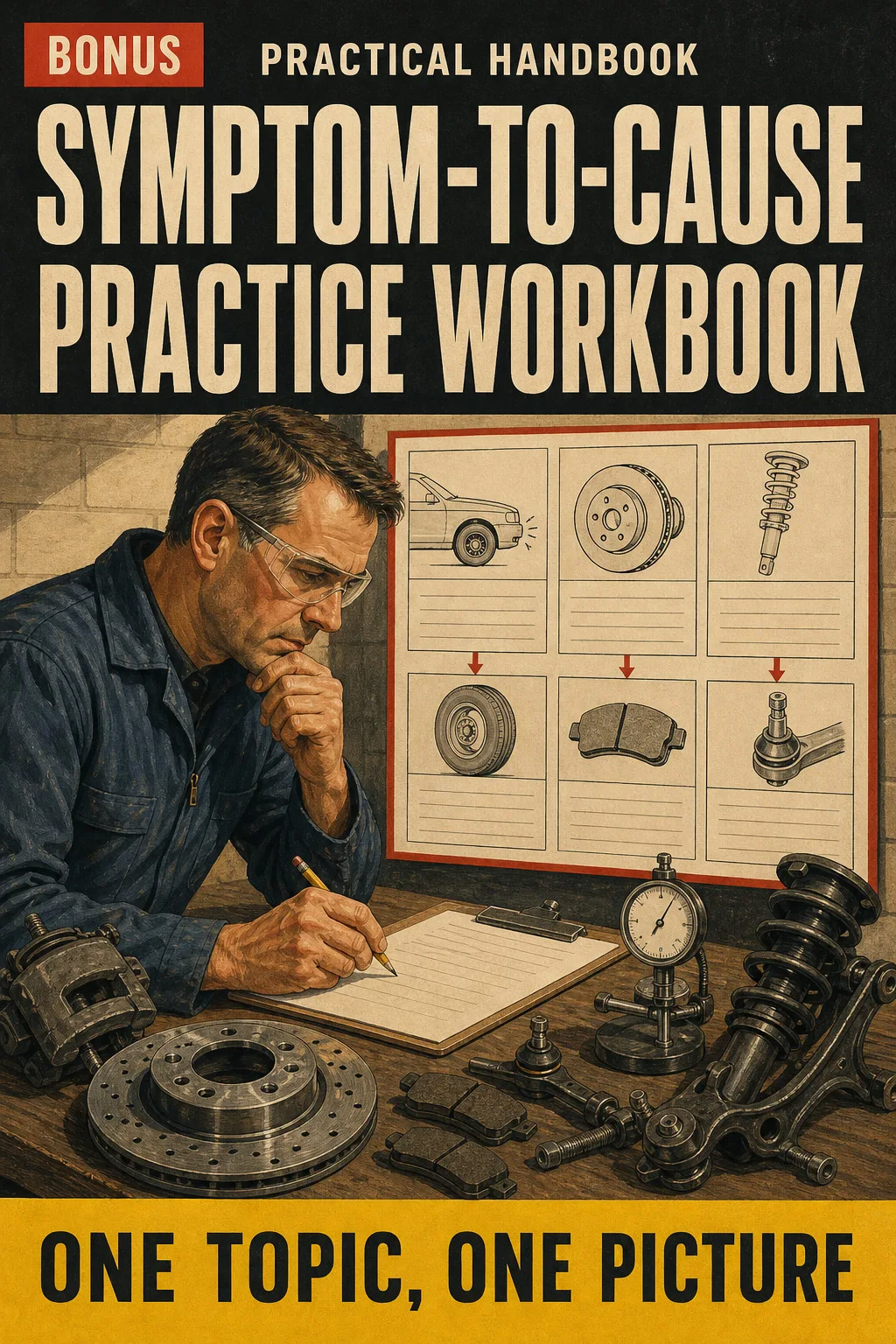
BONUS 1: «Symptom-to-Cause Practice Workbook»

Value on its own: US$ 17.90

Practise tracing real faults (a car that pulls to one side, a spongy pedal, a knock over bumps) back to the part to check first, before you pick up a spanner.

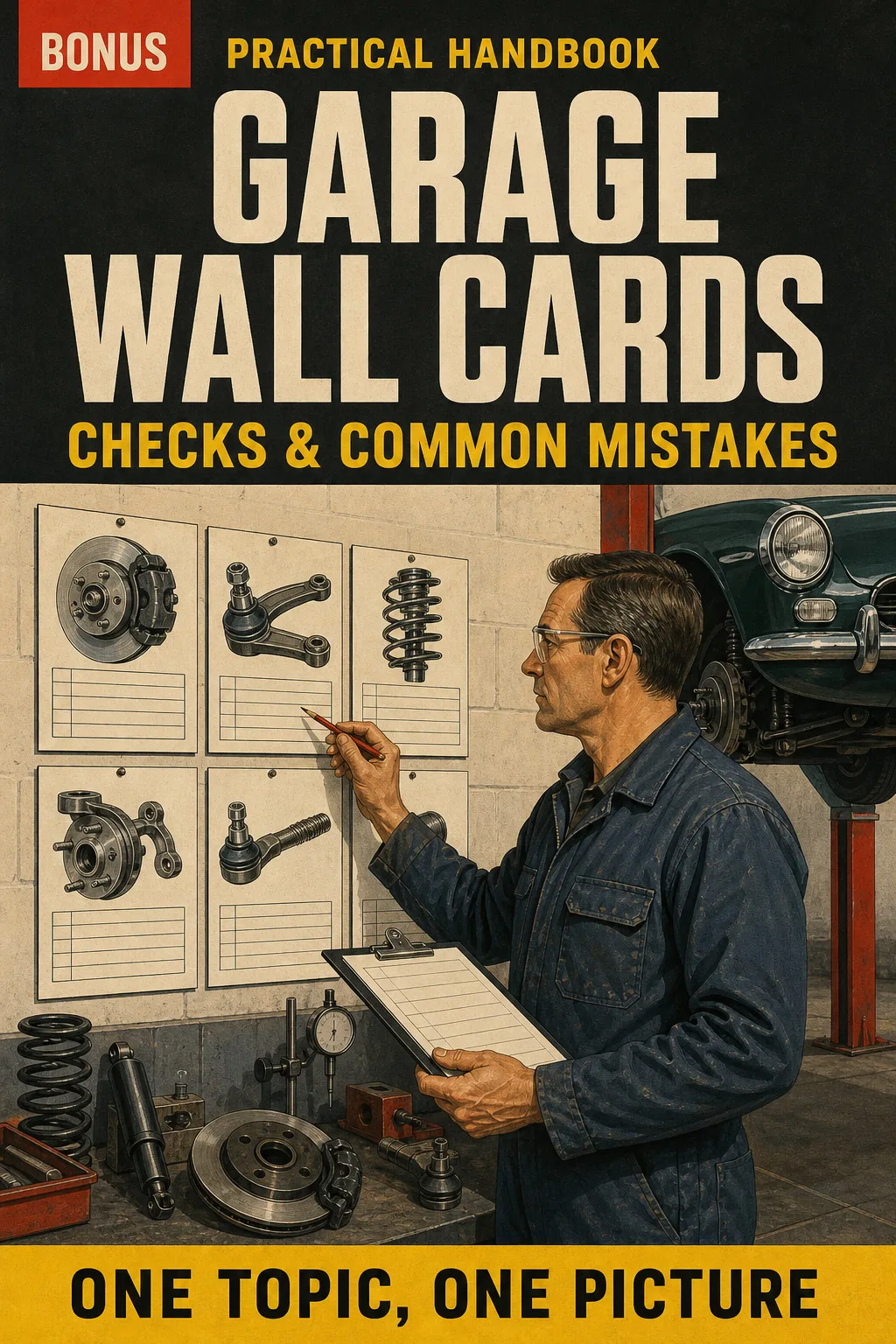
Garage Wall Cards: Checks & Common Mistakes

BONUS 2: «Garage Wall Cards: Checks & Common Mistakes»

Value on its own: US$ 14.90

The bleeding order, the play checks and the most common overhaul mistakes on printable cards, so you have them at a glance on the bench.

Classic Brakes & Suspension Illustrated with 2 Free Books

  • Classic Brakes & Suspension Illustrated: 69 illustrated pagesUS$ 63
  • BONUS 1: Symptom-to-Cause Practice WorkbookUS$ 17.90
  • BONUS 2: Garage Wall Cards: Checks & Common MistakesUS$ 14.90
  • High-resolution PDF to printIncluded
Total value US$ 95.80
YOUR PRICE:
US$ 27
You save US$ 68.80
YES, I WANT CLASSIC BRAKES & SUSPENSION ILLUSTRATED FOR US$ 27

📄 This is a digital PDF book sent to your email: nothing is printed or shipped.

Secure purchaseEncrypted payment30-day guarantee

PDF by email: We email you Classic Brakes & Suspension Illustrated as a PDF, together with the two free books. It's a single payment: no installments, no extra charges.

Who This Book Is For

Your MOT is booked

Your MOT is booked

You go through the brakes, steering and suspension pages beforehand and check play, pipes and hoses yourself, so nothing at the test comes as a surprise.

The car is on axle stands now

The car is on axle stands now

The printed page sits on the bench next to the wheel: the steps in order, the part drawn close up, and the maker's figures flagged to check in your manual.

You've done your own servicing for decades

You've done your own servicing for decades

For the jobs you only touch every few years, like kingpins or a wheel cylinder, you refresh the order and the small details in a few minutes.

Everything You Get Today

US$ 95.80US$ 27
YES, I WANT CLASSIC BRAKES & SUSPENSION ILLUSTRATED FOR US$ 27

📄 This is a digital PDF book sent to your email: nothing is printed or shipped.

30DAYS
GUARANTEE

30-Day Guarantee

Try Classic Brakes & Suspension Illustrated for 30 days, bonus books included.

We refund everything if the file won't open, if the book isn't what you see here, if you were charged twice or if the email doesn't arrive. Just email us.

You pay once. No subscriptions.

Frequently Asked Questions

Is it for me if I've been working on my own cars for years?

Yes. It's not a beginner's book: it's there to refresh the order and the details you forget between one overhaul and the next, especially on jobs you only do every few years.

Where does the content come from?

From the DVSA MOT inspection manual (brakes, steering and suspension sections), GOV.UK guidance on historic vehicles and standard workshop practice. Every maker's figure (wear limits, end float, toe, fluid type) is flagged for you to check in your own workshop manual.

Is it official material?

No. It's an independent illustrated guide. It isn't published, approved or endorsed by the DVSA, any manufacturer or any owners' club.

Does it replace my workshop manual or a professional?

No. It complements your workshop manual with the steps drawn in order. Brake testing at an MOT station and structural welding of mountings are work for a professional.

Does it cover my car?

It covers the systems most British classics share: drum and early disc brakes, single and dual circuits, kingpins or ball joints, lever arm or telescopic dampers, steering box or rack, right-hand drive. Your model's own figures come from your workshop manual.

When and how does it arrive?

The book and the 2 bonus books arrive as a PDF by email, at the address you enter at checkout.

Do I have to pay every month?

No. It's a one-off payment, with no subscription.

Can I have it on paper?

Yes. Print it at home or at a print shop and keep it on the bench in the garage.

How does the refund work?

You have 30 days. We refund everything if the file won't open, if the book isn't what you see on this page, if you were charged twice or if the email doesn't arrive: just email us.

Before You Close This Page

No more rereading the same paragraph with the caliper in bits.

The bleeding order is drawn: you see it and get on with it.

You walk into the garage knowing where every step is.

Drawings make studying faster.

The book is right below.

One-time payment: US$ 27 · Guarantee: 30 days · PDF by email

YES, I WANT CLASSIC BRAKES & SUSPENSION ILLUSTRATED FOR US$ 27

📄 This is a digital PDF book sent to your email: nothing is printed or shipped.